


 Jessica Reftel Evans
Building a granny flat on your property is the ultimate solution to multigenerational living, but the benefits don’t stop there. From a teenage drop zone to a work-from-home studio or a hard-working Airbnb investment, a granny flat can transform your life, as well as the bottom of your garden. Traditionally built for ageing parents, the granny flat is now in hot demand for teenagers and young couples as well thanks to rising property prices.
“We are in a housing crisis. There’s a population growing faster than the houses we’re building,” interior designer and former real estate agent James Treble tells Home Beautiful‘s The Edit podcast. “However, [a granny flat is] not just for people to live in permanently. You know when you get to that stage where you love your teenager, but you just don’t like them all the time? Send them out, get a tiny home and let them live in the backyard and learn what the big world’s about.”
Listen to James Treble on The Edit podcast:
Other than the obvious positives, like increasing your property value and offering flexibility to house guests, a granny flat can also be a neat little sanctuary within your home grounds.
Here we look at the ins-and-outs of building a granny flat on your property, including design inspiration, layout tips and more.
Jump to:
What is a granny flat?
A granny flat is a self-contained dwelling in the backyard of a main residence. It’s given the name ‘granny flat’ for its common purpose of housing a family’s elderly relatives, providing an independent but functional flat alongside the family home.
A granny flat is different to a backyard studio or ‘tiny home’, which are both smaller, not permanent, and not fully self-contained. “A tiny home is really small format,” James Treble explains. “It’s usually moveable, so it comes as a demountable.” (We go into this further, here.) Meanwhile, a granny flat is “a fixed dwelling. It’s built on your land. It’s got to meet requirements, and depending on how you do it, there’s fixed sizes.”
In Australia, precise definitions of a granny flat (including size constraints and rules of residence) vary between local councils, who regulate building and housing. For example, in NSW you need a minimum lot size of 450sqm. In Brisbane, your granny flat can be up to 80sqm, while in parts of Victoria and Tasmania, it must be 60sqm or less. Other states have rules around who can live in the flat.
Planning your granny flat will mean checking your state and local government rules around definitions and approvals.
If you’re fortunate enough to have the space, funds and approval, scroll on for some granny flat designs and tips to make the building process all-the-more easy.
Granny flat designs
Whether you’re bringing in a free-standing, flat-pack studio, or are renovating a shed, here are six different granny flat design examples to help you get started.
18m² granny flat design
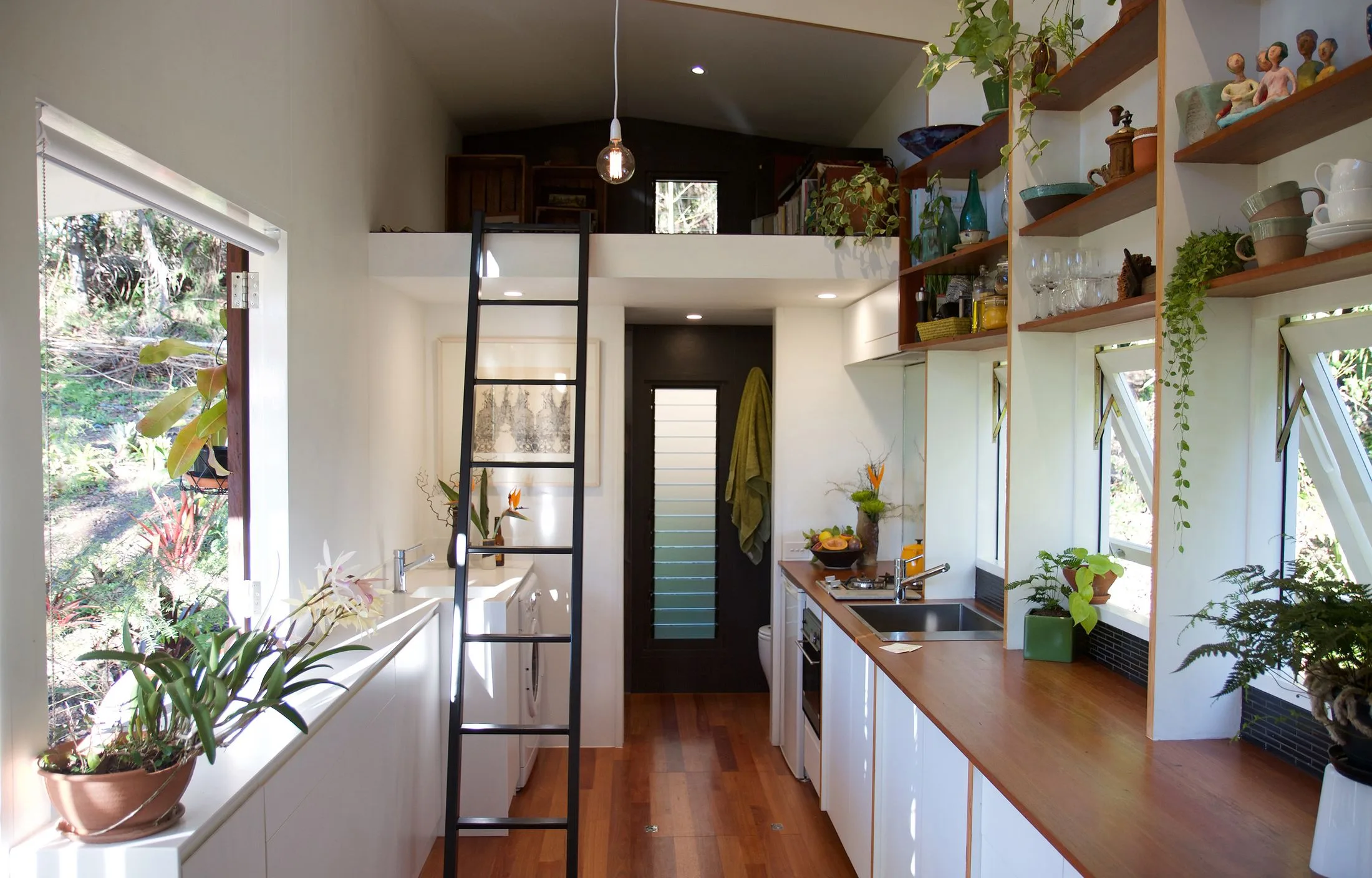
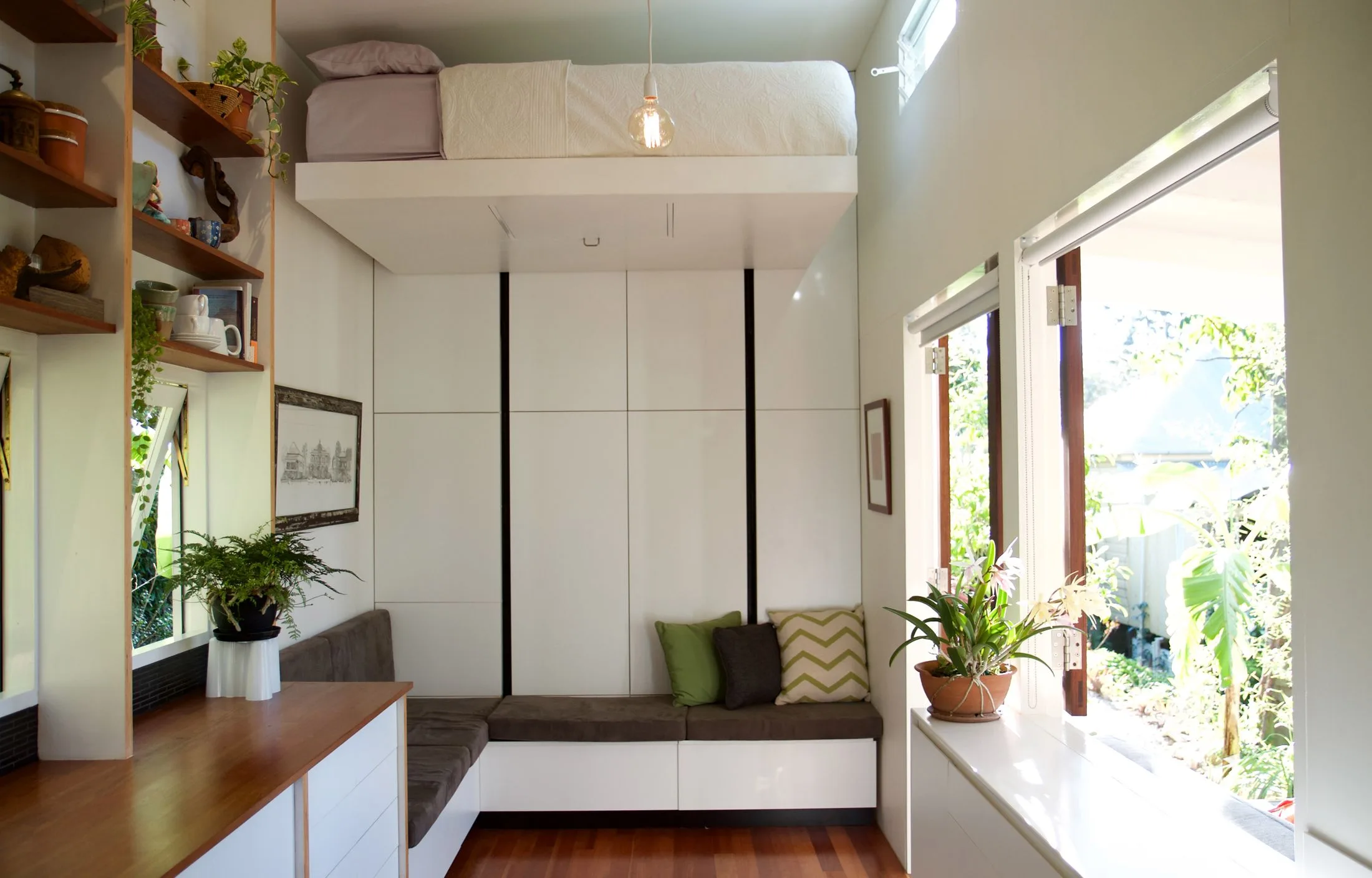
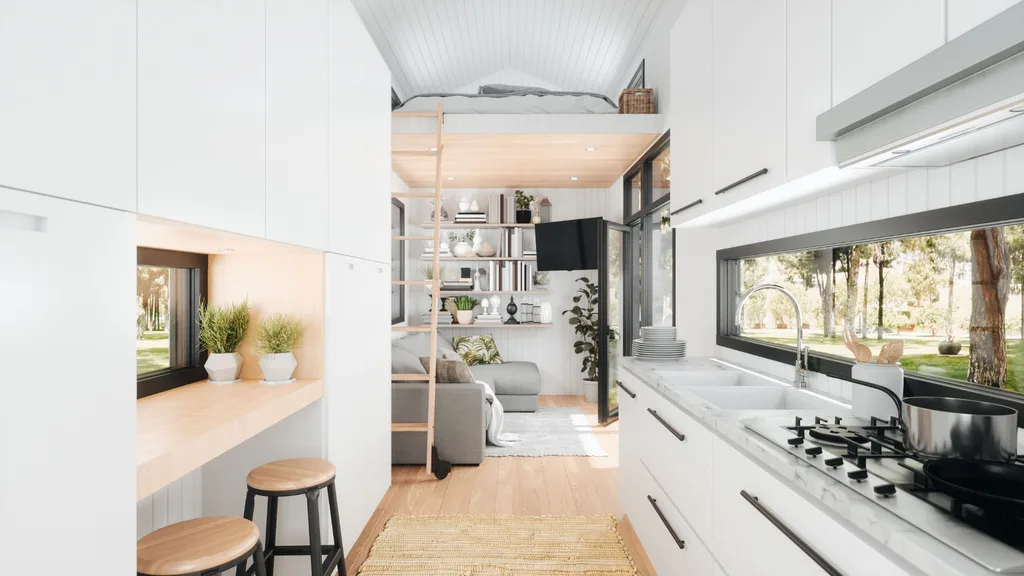
This 7.5 by 2.4 metre tiny home (18sqm) created by Greg Thornton Constructions and Nobel Carter Architects (formerly the Tiny House Company) makes the most of a tiny space to maximise storage. It even allows for two beds. While one is an upper-level loft, the other is a raiseable mattress which can be lifted and lowered within the space. One side of the living area is dedicated to the kitchen, including bench space, cabinets, a sink, stove and oven, while the other side is more storage and a washing machine. With a ladder and loft bedroom, it’s not ideal for older family members, but could be a solution for more agile residents.
50m² granny flat design
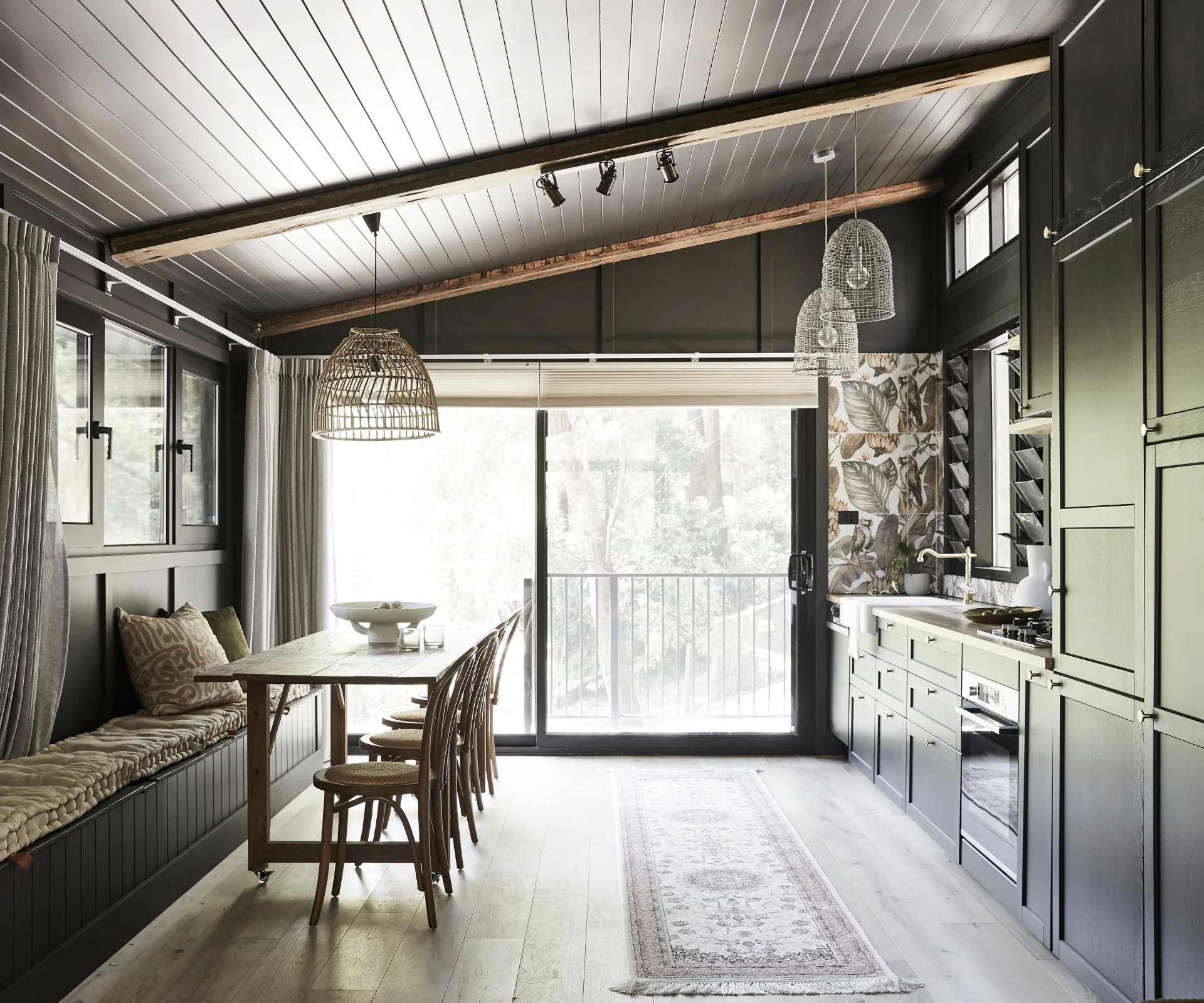
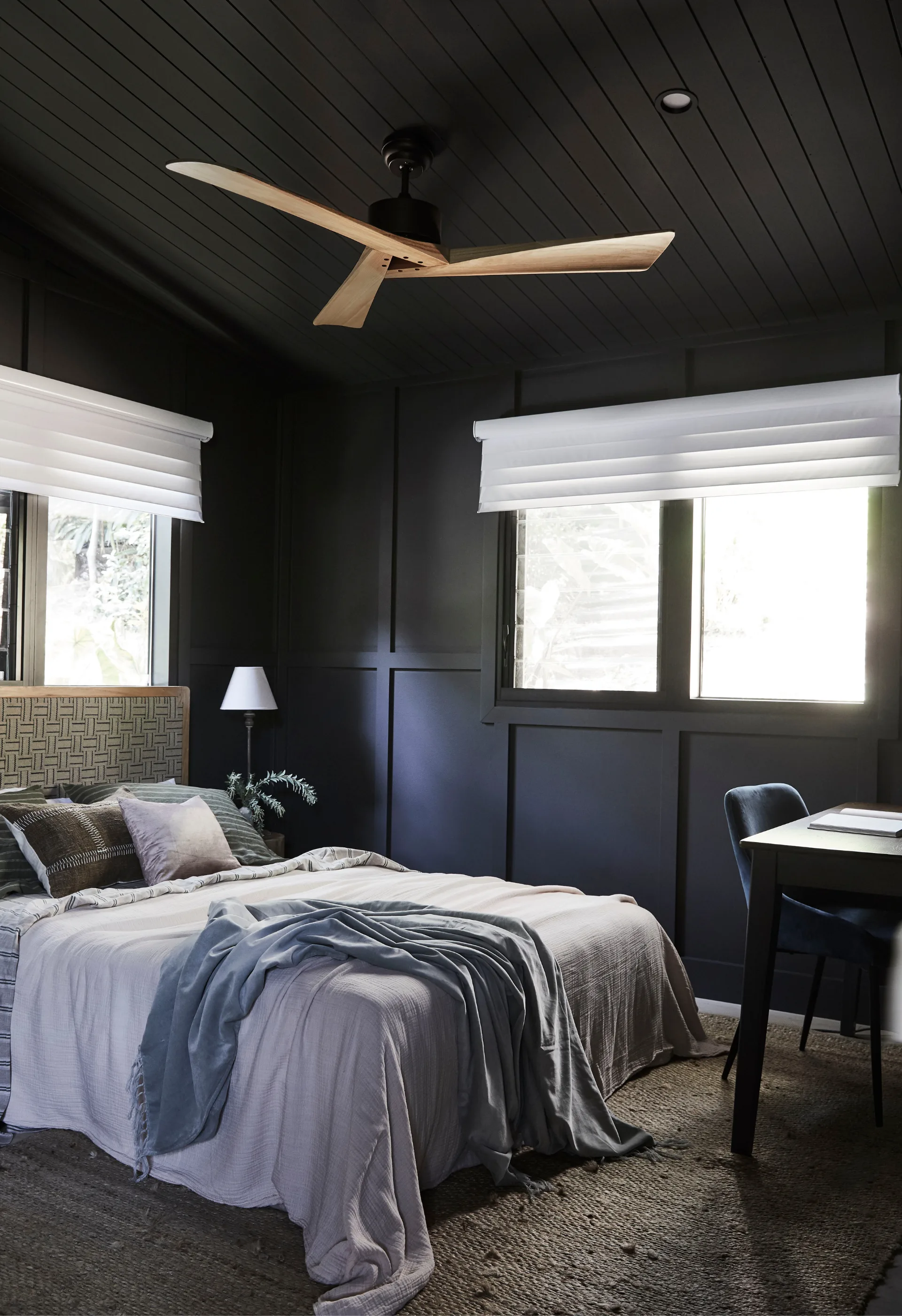
Still under the pre-requisite 60-80sqm granny flat rule in some states, this 50sqm backyard unit is a model of small-living style. The luxurious guest house sits on the Byron Bay property of designer-builder Saul Myers. “Often granny flats are built as a little square box on a super-tight budget, with little thought put into the space; my aim was to create a small architectural-style home that was sexy, smart and felt great to be in,” he told Home Beautiful at the time. Given the small floorspace, the granny flat is entirely open plan, with kitchen, living and bedroom areas in one large room like your classic New York loft. The bathroom is separated by a large barn door.
Simple granny flat design
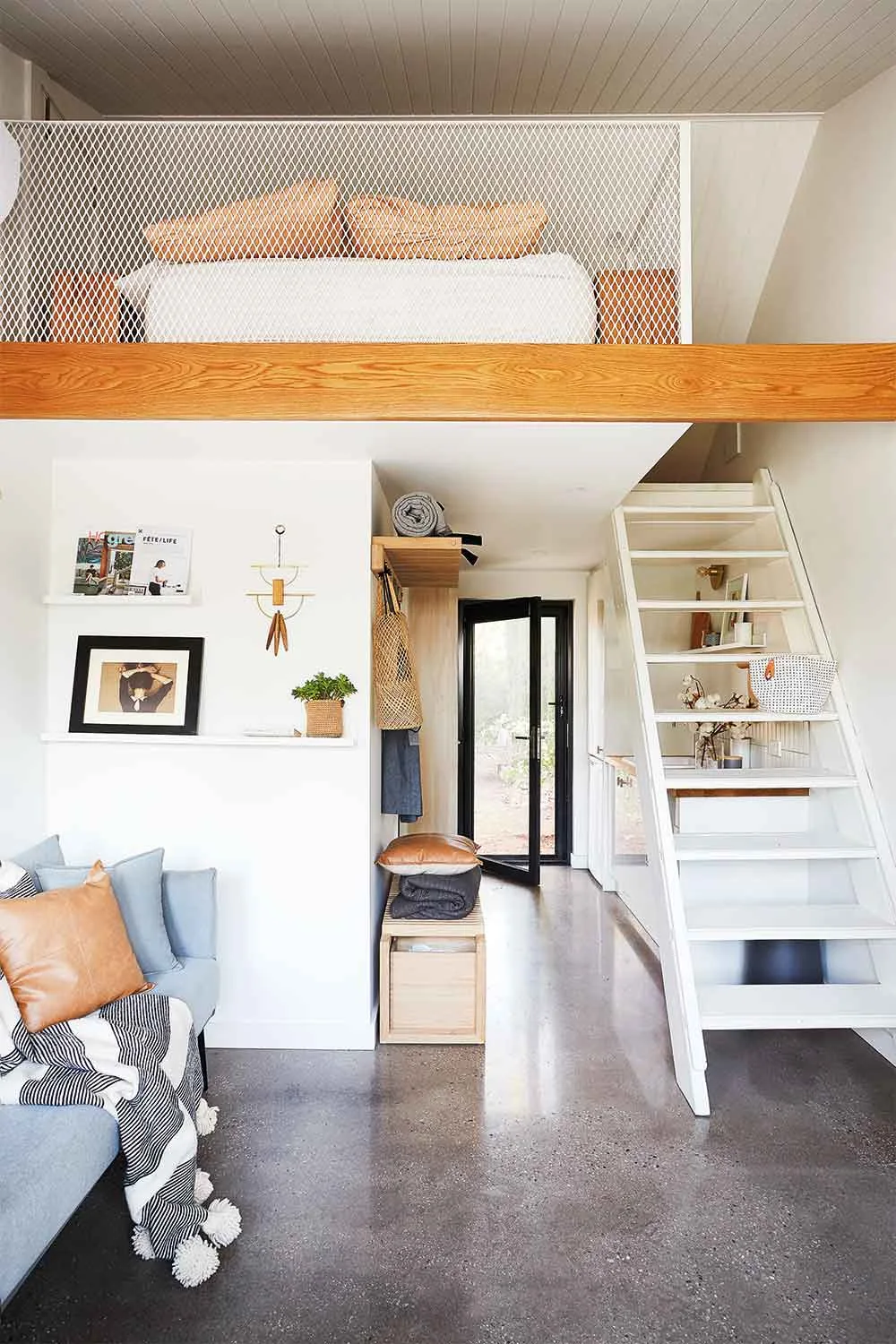
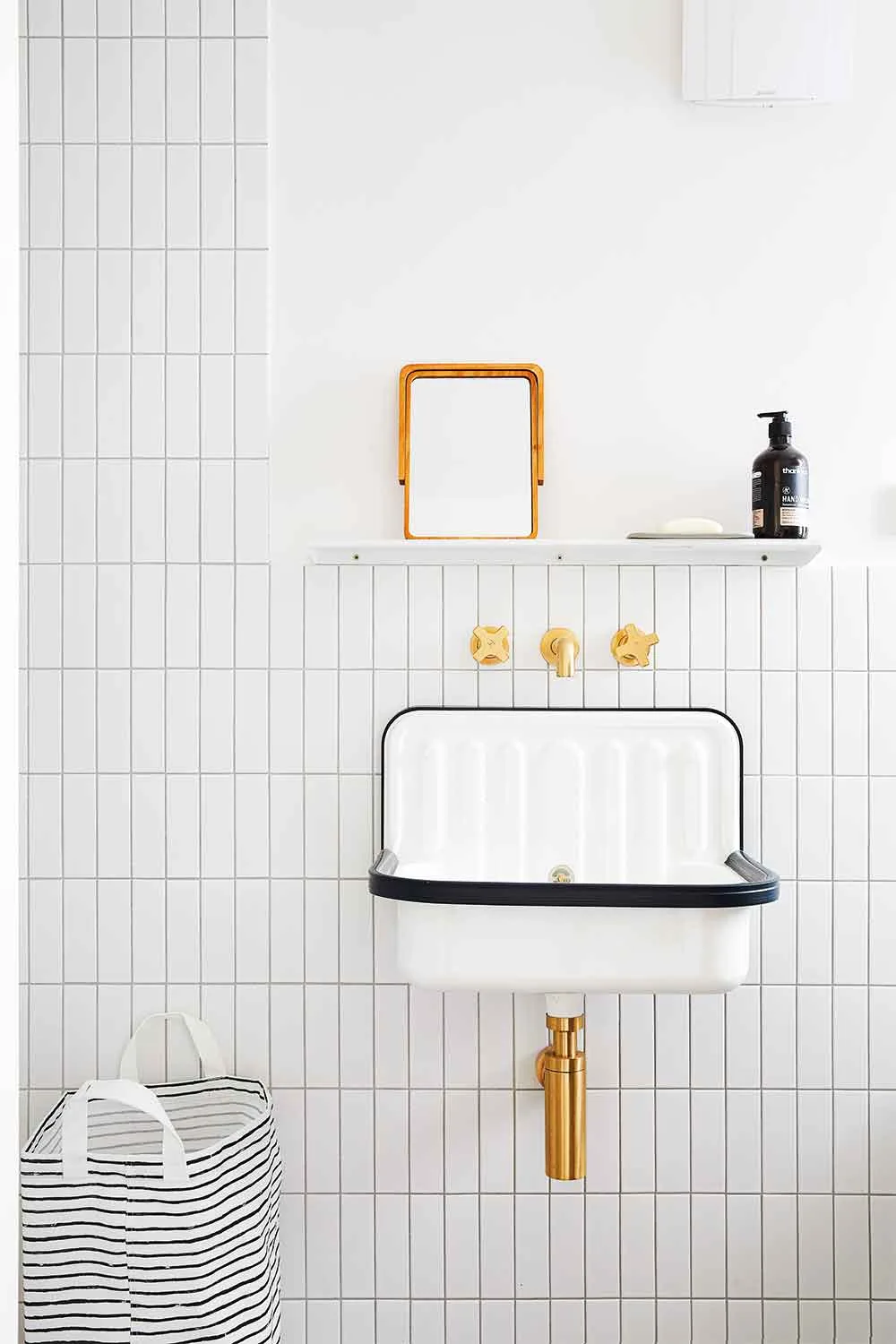
Another small, 18sqm granny flat, this shed conversion offers sleek finishes with only the most essential amenities. The renovation includes a loft-style bedroom above the bathroom and kitchen areas, overlooking a living area. The kitchen is basic, foregoing a stove and oven, but providing a built-in sink, bench space and storage. Meanwhile the slender bathroom makes the most of the space, with a toilet at one end, and a shower at the other. However, with a chic Reece enamel basin, white subway tiles, gold tapware and a waterfall showerhead, this granny flat doesn’t skimp on style.
Modern granny flat design
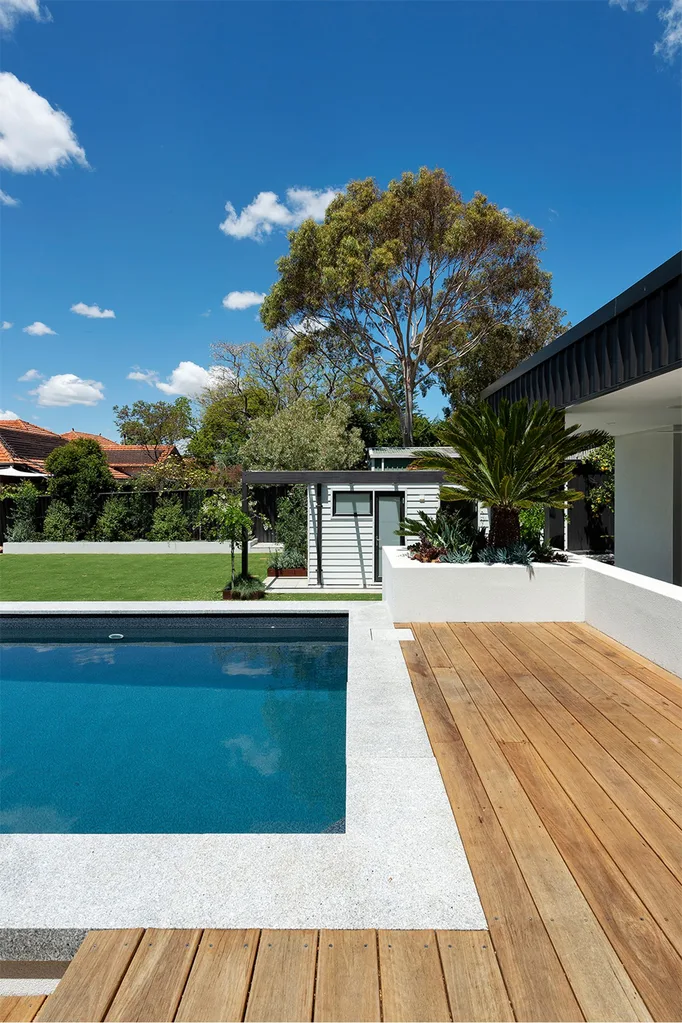
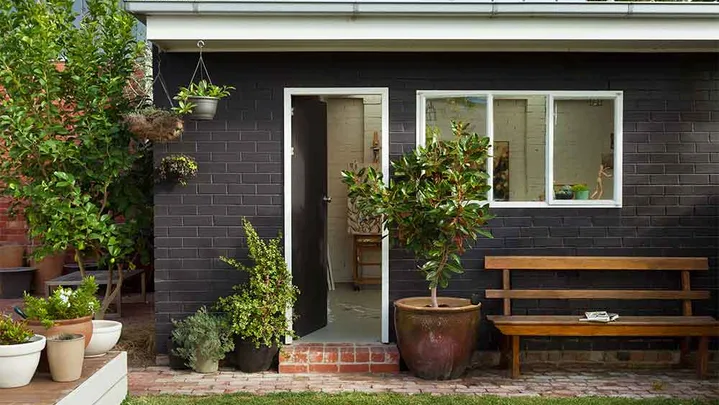
This contemporary granny flat was devised by Jen Burgess at Texture Studio in Fremantle, Western Australia. The sleek backyard renovation transformed an existing brick granny flat into a stylish black-and-white weatherboard cottage. The flat was created as part of a larger backyard renovation to ensure plenty of space for the family’s five teenagers. This design shows how a stylish exterior can be used to complement the main house.
Luxury granny flat design
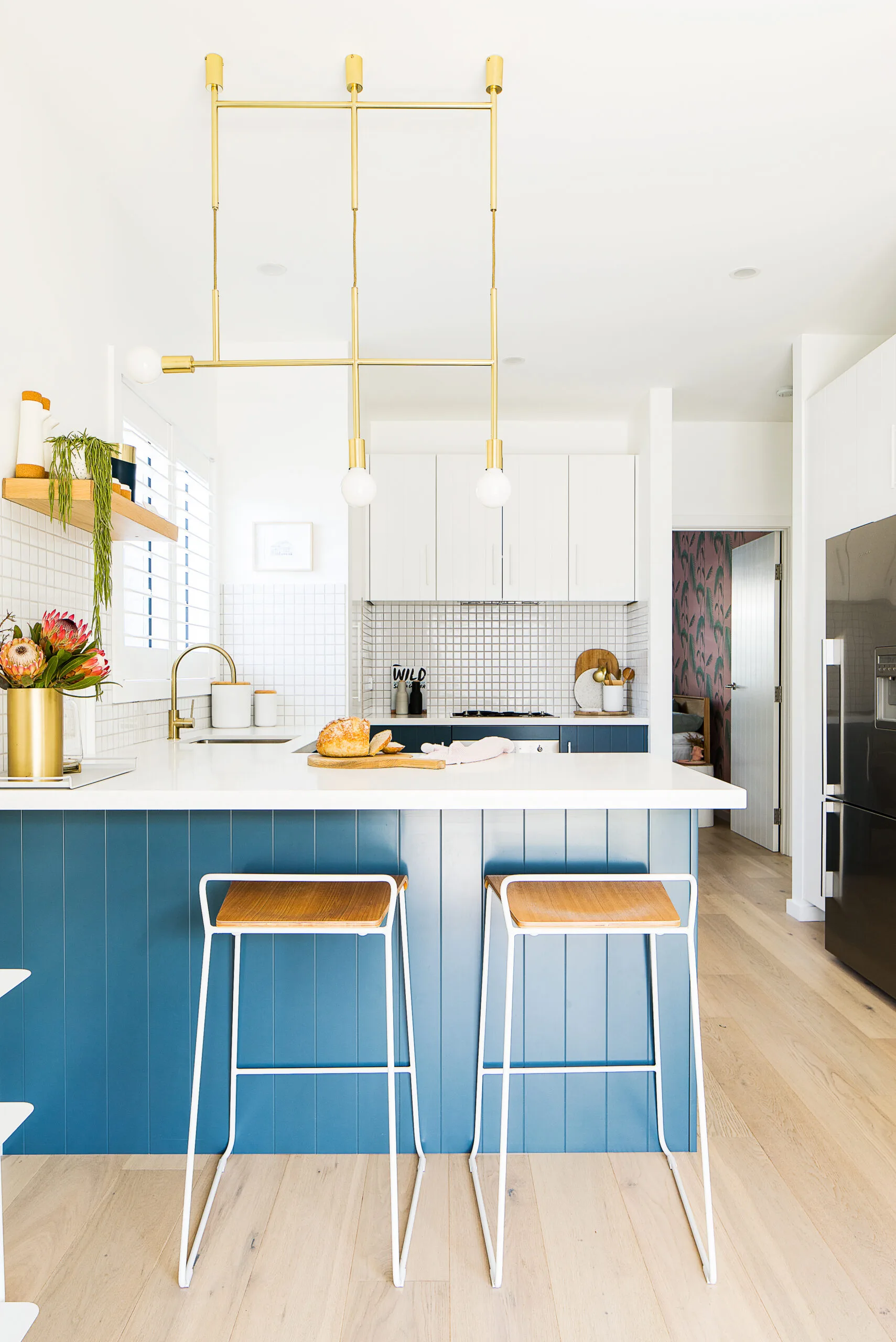
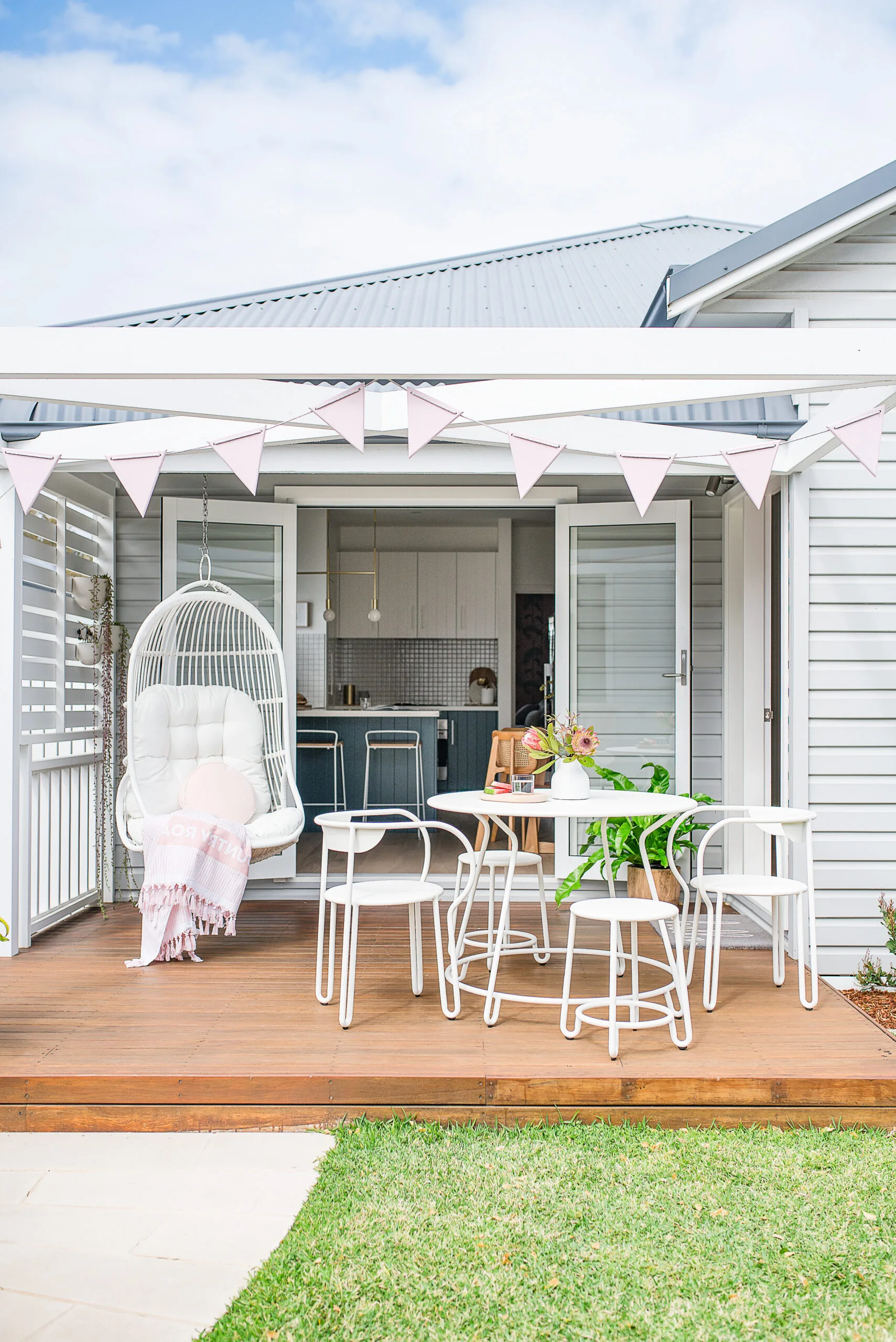
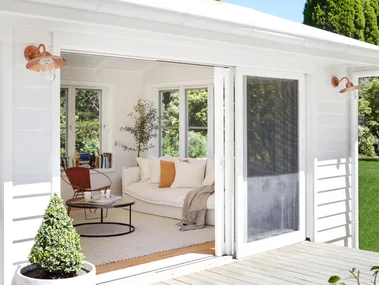
This relatively sprawling, two-bedroom granny flat is out the back of a home in Sydney’s northern beaches. From the pastel pink front door, to Fenton & Fenton furnishings, air conditioning and statement light fittings, no expense has been spared for this backyard unit. Renovated with the aid of the homeowner’s daughter, an interior designer, the family renovated an existing backyard cottage into a modern-luxe granny flat. With plenty of space to play with, the secondary dwelling has two beds, a full kitchen, living area, bathroom and indoor and outdoor dining areas. The granny flat serves as guest accommodation for out-of-town relatives, adult children and the occasional Airbnb guest.
Shed conversion granny flat
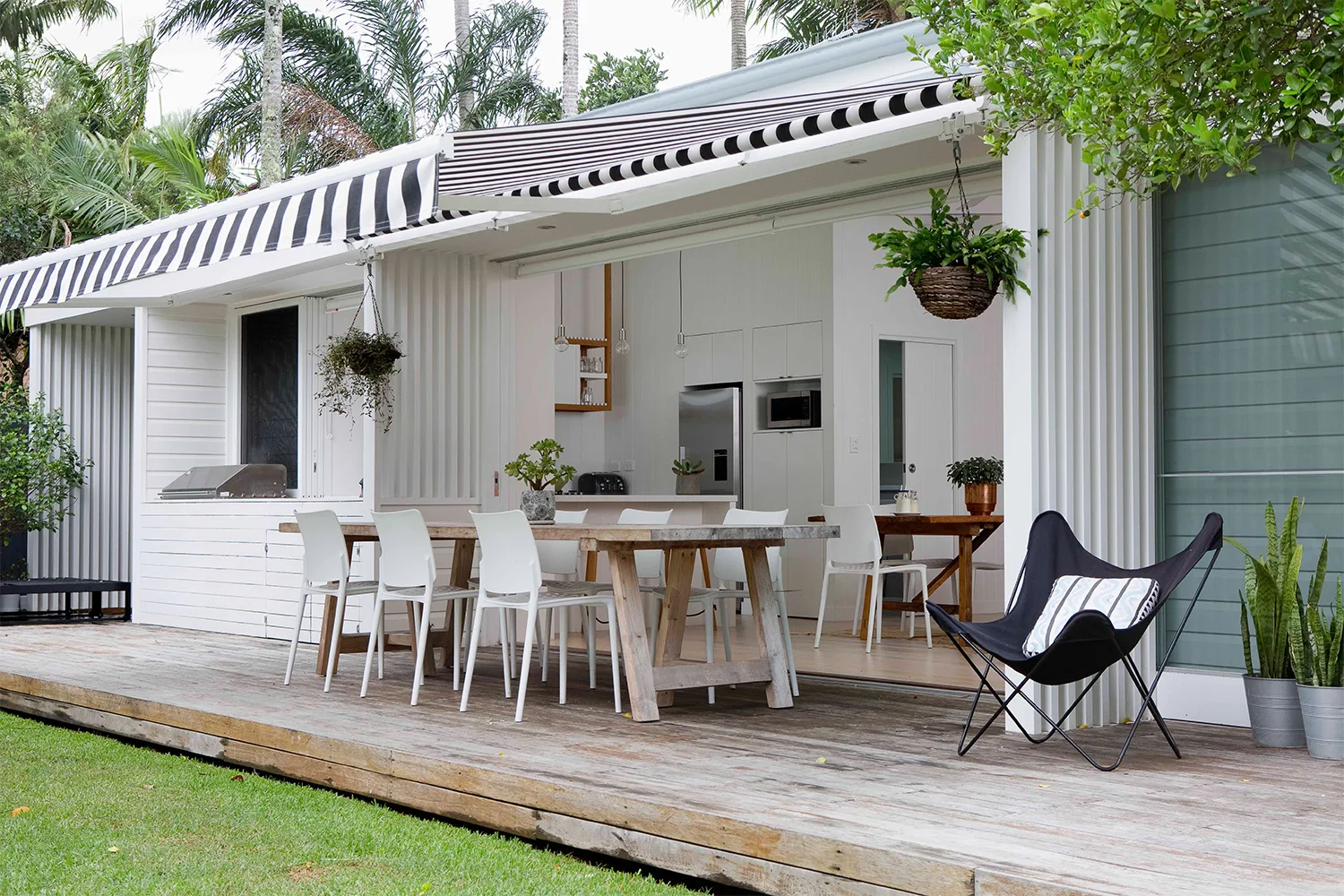
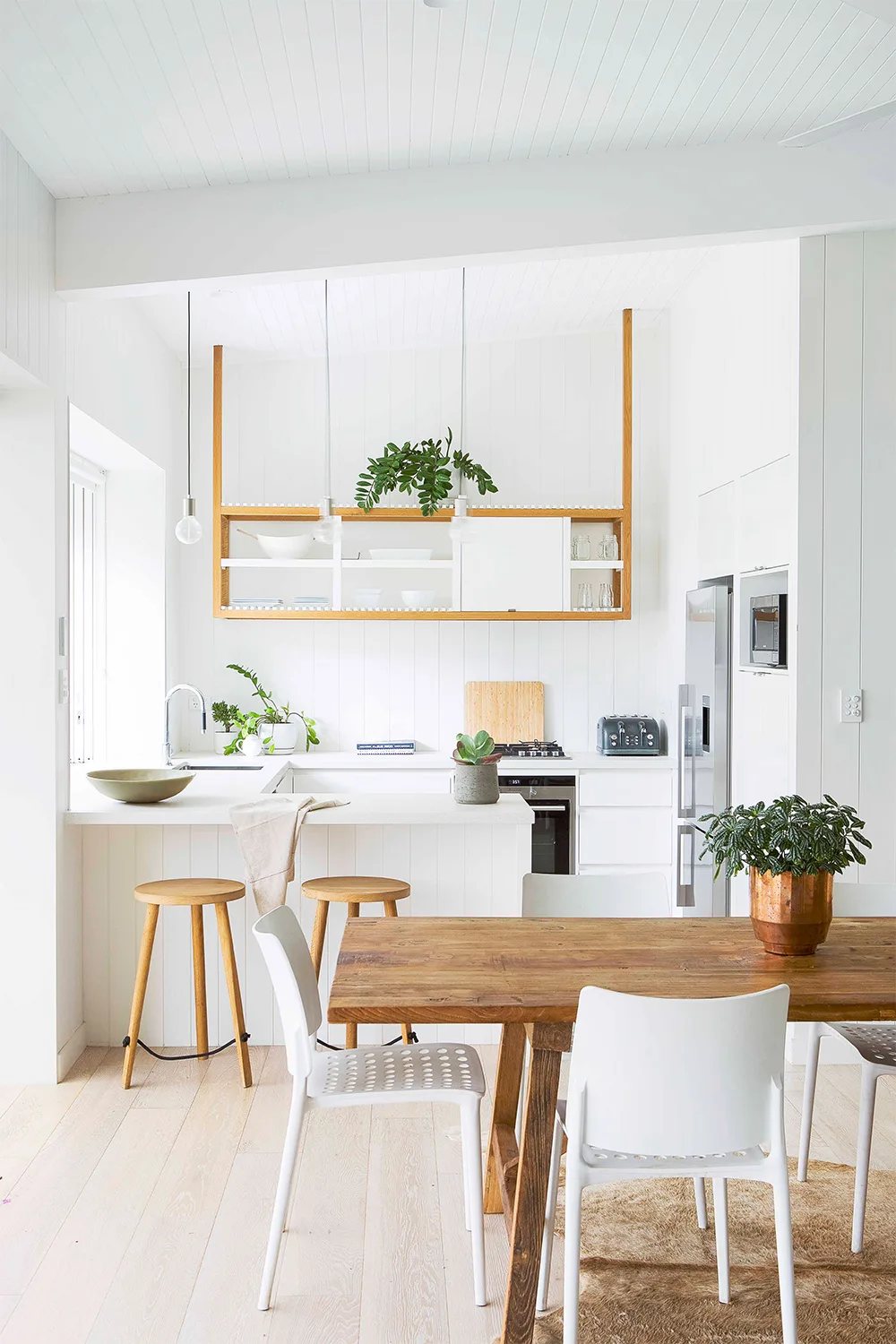
Looking at it now, you wouldn’t think this granny flat was once a concrete shed with roller doors. Created by Davis Architects and Vardy Building in Byron Bay, the underutilised shed is now a fully decked-out guest house. The aesthetic conversion was completed with the help of new timber floorboards, VJ walls and ceiling cladding to disguise the old raw concrete and metal structure. Additional walls were added inside to create separate bedroom and bathroom/laundry facilities. The result is an Instagram-worthy cottage for visitors.
How much should a granny flat cost?
The cost of your granny flat will depend on multiple factors, particularly size, layout and finishes. Typically, granny flats will cost upwards of $150,000 in construction costs. A tiny home or studio costs less, and can even be bought from Bunnings for less than $30k. But remember, a flat-pack studio is not technically a second dwelling!
Do you need council approval for a granny flat?
This depends on your property and local council. You may be able to avoid council approval, or seek fast-tracked approval, if you have a large property (more than 450 sqm) and a small granny flat (less than 60sqm), as is the case in NSW. However, ultimately, there’s no one-size-fits-all approach between state laws or local councils in Australia. Best to do your own research!
State-by-state rules for granny flats in Australia
The approval process and rental permissions for each Australian state may vary, but here’s a state-by-state break down of granny flat sizes versus lot sizes, especially if you’re hoping for more lenient council approvals.
| State | Max. flat size | Min. Lot size |
| NSW | 60m² | 450m² |
| VIC | 60m² | 300m² |
| QLD | 80m² | 450m² |
| WA | 70m² | Varies, no minimum |
| SA | 60-90m² | 450m² |
| TAS | 60m² | Varies, no minimum |
| ACT | 40-90m² | 500m² |
| NT | Varies | Varies |
(Last updated: April 2026)
When it comes to maximum granny flat sizes and minimum lots, these are still subject to differing council laws. They may also be altered depending on the approval pathway, whereby the above listed sizes might be subject to less stringent approval processes. Moral of the story? Always check with your local planning authority!
What’s the difference between a granny flat and a tiny home?
While granny flats are considered permanent, fixed structures, tiny homes are typically smaller and impermanent, and can be moved or towed, if necessary. For this reason, tiny homes often fall under ‘caravan’ regulations, whereby people can legally “park” their structure in their backyard. However, this may come with living restrictions, including not technically being allowed to live in the structure for more than 60 days.
“It’s a funny little grey area with councils and lodgements as far as where it can be placed. It sort of covers a caravan [in terms of regulation], because it’s not a fixed dwelling — so, it’s not locked in on bearers and joists, or a concrete pad onto the floor,” James explains. “It’s great for people who maybe live in fringe areas of cities, or in bushfire areas where they may have a dwelling but can’t legally build there. So, this [a tiny home] can be towed in a hooked up to a septic, maybe connected to a water tank, or solar panels. And, if there’s a bushfire, you can actually hook it up to the four-wheel drive and take it out of there.”
However, a common misconception is that a tiny home can automatically skirt council approvals. This is not the case, James warns, encouraging everyone to still check their council regulations.
Watch James Treble on The Edit podcast on YouTube, or listen wherever you get your podcasts.

